Embark on a journey of self-discovery and aspiration with this comprehensive guide on creating and managing a personalized bucket list collection. This guide will equip you with the knowledge and tools to craft a meaningful collection, encompassing a wide range of experiences, from travel adventures to personal growth endeavors. It will also explore the importance of organization, visual representation, and ongoing maintenance to ensure your bucket list remains a source of inspiration and motivation.
From defining the scope of your collection to establishing a robust organizational structure, this guide meticulously details every step of the process. It delves into strategies for generating ideas, incorporating feedback, and sharing your progress with others. This framework provides a clear path to achieving a truly personalized and motivating bucket list collection.
Defining a Bucket List Collection
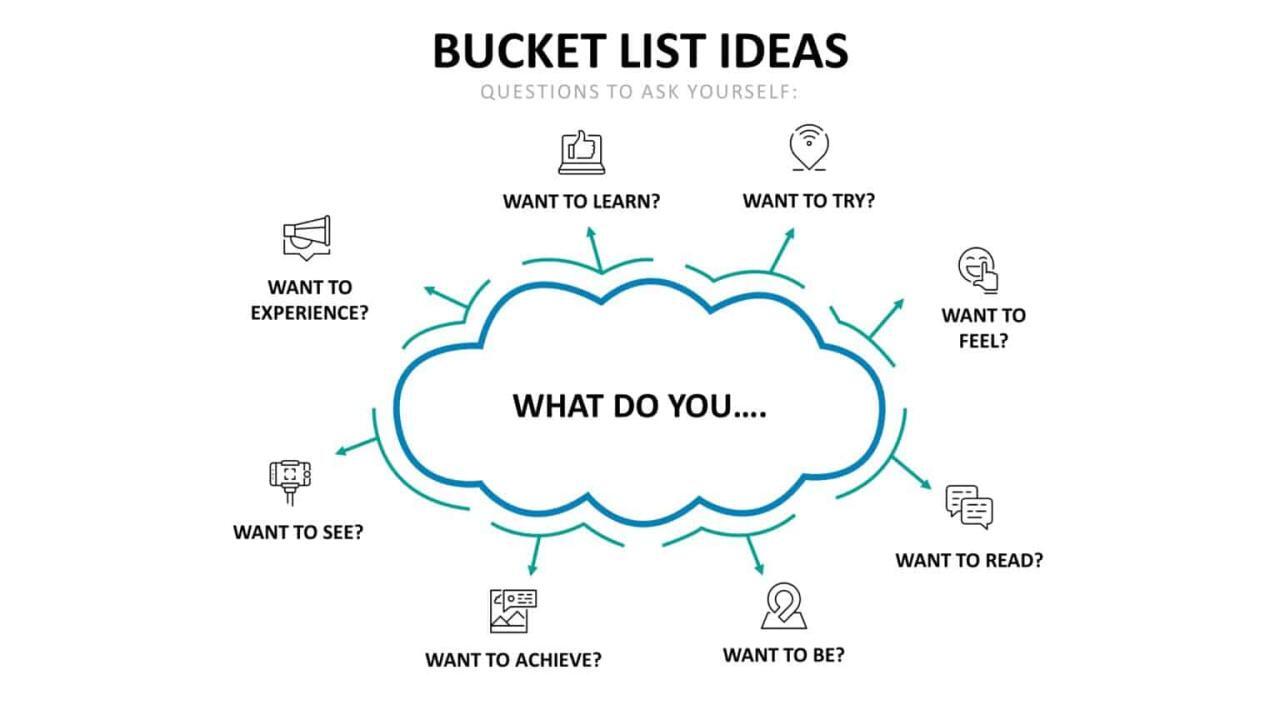
A bucket list collection is a curated list of aspirations, experiences, and goals that an individual wishes to achieve during their lifetime. It serves as a personal roadmap for self-discovery and growth, providing a framework for pursuing meaningful activities and personal development. This collection can be a powerful tool for motivation and provides a tangible representation of one’s dreams and desires.A bucket list collection transcends simple wish lists; it represents a deliberate commitment to experiencing life to the fullest.
It is a dynamic document that can evolve and adapt as an individual’s interests and priorities change. The collection encourages introspection and the exploration of potential life experiences.
Types of Bucket Lists
A bucket list can encompass a wide array of interests and aspirations. It’s not confined to a single theme; it can encompass multiple facets of life.
- Travel Bucket Lists: These focus on visiting specific destinations, experiencing different cultures, and exploring the world. Examples include visiting iconic landmarks, experiencing unique culinary traditions, or immersing oneself in diverse historical sites.
- Personal Development Bucket Lists: These lists emphasize self-improvement, skill acquisition, and personal growth. Examples include learning a new language, mastering a musical instrument, or developing a specific skill like public speaking.
- Experience-Based Bucket Lists: These lists concentrate on engaging in unique and memorable activities. Examples include skydiving, bungee jumping, attending a concert by a favorite artist, or volunteering for a cause one cares about.
- Adventure Bucket Lists: This category focuses on thrilling activities and challenges. Examples include hiking a challenging mountain trail, conquering a fear, or participating in a demanding physical challenge.
Characteristics of a Bucket List Collection
A bucket list collection is distinguished by several key characteristics:
- Personalization: Each bucket list is tailored to the individual’s unique interests, aspirations, and values. There is no one-size-fits-all approach.
- Flexibility: Bucket lists are not rigid; they can be adapted and modified as the individual’s circumstances change. New items can be added, and existing ones can be removed or adjusted as priorities shift.
- Motivation: The act of creating and maintaining a bucket list collection fosters a sense of purpose and encourages individuals to take action towards achieving their goals.
- Tangibility: A bucket list collection provides a tangible representation of dreams and aspirations, making them more attainable and motivating.
Benefits of Having a Bucket List Collection
| Benefit | Detailed Explanation |
|---|---|
| Increased Motivation | A well-defined bucket list serves as a constant source of inspiration, prompting action towards achieving personal goals. |
| Enhanced Self-Awareness | The process of creating a bucket list encourages reflection on personal values, passions, and aspirations, leading to greater self-understanding. |
| Improved Time Management | Prioritizing items on the bucket list helps in allocating time effectively towards achieving personal objectives. |
| Greater Fulfillment | Completing items on a bucket list brings a sense of accomplishment and satisfaction, contributing to a more fulfilling life. |
| Increased Productivity | The sense of progress derived from completing items on the list often leads to a cycle of accomplishment and renewed motivation, boosting productivity. |
Organizing and Structuring the Collection

A well-organized bucket list collection is crucial for effective management and motivation. Proper structuring allows you to easily visualize your goals, track progress, and stay inspired. This section details methods for categorizing, chronologically organizing, and prioritizing your bucket list items, along with incorporating a rating system and tracking progress.
Categorizing Bucket List Items
Categorization is a fundamental step in organizing your bucket list. It allows for focused planning and enables you to segment aspirations into manageable groups. By grouping similar items, you can identify themes and patterns in your desires, potentially uncovering hidden connections or unexplored areas of interest. For example, categorizing by location (e.g., “Travel”), activity (e.g., “Adventure”), or personal growth (e.g., “Learning”) can help you see the bigger picture.
Organizing Chronologically
Chronological organization arranges items based on their anticipated or desired completion dates. This method is particularly useful for tasks or experiences that involve a timeline, such as traveling to specific locations or completing educational courses. This approach helps visualize the progression of your aspirations and allows for realistic scheduling. For example, if you plan to travel to Europe in 2025, you can list the related bucket list items in order of when you intend to visit each country.
Organizing Thematically
Thematic organization groups items based on shared characteristics or themes. This approach can highlight patterns and connections between your goals. For example, you might have a theme for “Personal Growth,” which includes activities like learning a new language, reading more books, or taking a course on a new subject. Grouping items by theme enhances the overall coherence of your bucket list.
Organizing by Priority
Organizing by priority assigns a ranking to each item based on its importance or urgency. This method is helpful for focusing on the most significant aspirations first. Prioritization can be subjective and may change over time. For example, you might prioritize learning a new skill over a particular travel experience because of its immediate impact on your career.
Incorporating a Rating System
A rating system or weighting scheme allows you to quantify the perceived value or significance of each bucket list item. This can be a numerical scale (e.g., 1-5) or descriptive labels (e.g., “High,” “Medium,” “Low”). This system helps you determine which items are most crucial and allocate time and resources effectively. For instance, a high-rated item might be learning a new musical instrument, while a medium-rated item might be trying a new cuisine.
Tracking Progress on Items
Tracking progress is essential for maintaining motivation and accountability. This involves documenting the status of each item, such as “Completed,” “In Progress,” or “To Do.” Regular updates and check-ins will help you stay on track and celebrate milestones. A simple visual representation, like a checkmark next to completed items, can provide a satisfying sense of accomplishment.
Example Spreadsheet Template
| Item Description | Category | Priority (1-5) | Completion Date | Status |
|---|---|---|---|---|
| Visit the Eiffel Tower | Travel | 4 | 2024-06-15 | To Do |
| Learn Spanish | Personal Growth | 3 | 2024-12-31 | In Progress |
| Write a Novel | Creative Pursuits | 5 | 2025-03-15 | To Do |
This spreadsheet template provides a basic framework. You can customize it further by adding columns for estimated cost, resources needed, or assigned individuals. Adapt this template to your specific needs and preferences for a more tailored approach to managing your bucket list collection.
Creating and Adding Items
A well-maintained bucket list collection requires a constant influx of inspiring ideas. This process is vital for keeping the list engaging and motivating. Regular additions maintain a sense of progress and excitement, ensuring the list remains a dynamic reflection of your aspirations.Generating new items is a continuous process that draws upon various sources and methods. This section details the strategies for effectively adding and refining your bucket list items, ensuring that your list evolves with you.
Methods for Generating New Items
Generating new bucket list items can be approached through various creative methods. Brainstorming sessions, whether individual or collaborative, can be exceptionally fruitful. Freewriting, where you jot down every idea that comes to mind without judgment, can unearth hidden desires and ambitions. Mind mapping can visualize connections between different interests, leading to novel and exciting possibilities.
Sources of Inspiration
Inspiration for new bucket list items can stem from a multitude of sources. Books, films, and documentaries often depict extraordinary experiences and destinations, igniting a desire to explore or replicate them. Conversations with friends and family, colleagues, or even strangers can reveal new perspectives and unanticipated possibilities. Personal experiences, both positive and challenging, offer valuable insights into what truly excites or motivates you.
Travel blogs, articles, and social media posts can also unveil captivating destinations, activities, or experiences that inspire new items.
Adding New Items to the Collection
Adding new items to your bucket list collection requires a structured approach. First, thoroughly consider the item’s feasibility and alignment with your values and aspirations. Next, describe the item with clarity and detail. Include any relevant dates, locations, or specific requirements. Categorizing items by theme, location, or activity type can enhance organization and retrieval.
Finally, assigning a level of difficulty and potential cost can provide a more realistic perspective on the item’s attainability.
Actionable Bucket List Items
| Category | Item | Description | Difficulty | Cost |
|---|---|---|---|---|
| Travel | Visit the Great Wall of China | Experience the iconic structure and history. | Medium | High |
| Adventure | Go rock climbing in Yosemite National Park | Conquer a challenging rock face. | High | Medium |
| Learning | Learn to play the guitar | Master a musical instrument. | Medium | Low |
| Experiences | Attend a professional sporting event | Experience the excitement of a live game. | Low | Variable |
| Personal Development | Write a novel | Complete a creative writing project. | High | Low |
Note: Difficulty and cost are subjective and may vary based on individual circumstances.
Visual Representation and Presentation

A visually appealing bucket list collection enhances its enjoyment and motivation. A well-designed presentation can inspire action and serve as a constant reminder of aspirations. Careful consideration of the visual elements, whether digital or physical, is key to creating a collection that effectively communicates the items on the list.Effective visual representation fosters a stronger connection with the goals within the collection.
This enhanced engagement leads to a more proactive approach toward achieving those goals.
Methods for Visual Representation
Various methods can be employed to visually represent a bucket list collection, each with its unique strengths. Digital platforms offer flexibility and easy editing, while physical formats provide a tangible sense of accomplishment and personal touch.
- Digital Scrapbooks/Documentaries: Digital platforms like Google Slides, Canva, or dedicated scrapbook software allow for dynamic layouts, embedding images, and multimedia elements. This flexibility enables customization with various fonts, colors, and artistic elements, making the collection visually appealing and personalized. They also facilitate easy updating and sharing. Interactive elements like hyperlinks to related resources or videos can add value.
- Physical Scrapbooks: A physical scrapbook provides a tangible and tactile experience. The process of gathering and arranging photographs, mementos, and handwritten notes fosters a sense of accomplishment. This approach allows for incorporating unique elements like pressed flowers, ticket stubs, or hand-drawn illustrations, creating a truly personalized representation of the bucket list.
- Wall Calendars/Posters: A calendar or poster format offers a readily visible reminder of the items on the bucket list. Color-coding or visually engaging design can highlight different categories or stages of progress. This method is especially useful for tracking monthly or yearly goals.
- Interactive Websites/Apps: These platforms allow for incorporating interactive elements like progress bars, checkboxes, or maps to visually represent the progress of achieving bucket list items. They can also include reminders, scheduling tools, and community features to connect with others.
Designing a Visually Appealing Layout
A well-structured layout enhances the visual appeal of the collection and improves its usability.
- Color Coordination: Employing a consistent color scheme, perhaps based on categories or themes, creates a cohesive and visually appealing look. For example, travel destinations could be represented by their country’s flag colors.
- Font Selection: The choice of fonts should complement the overall aesthetic. Consider the readability and visual impact of different fonts, ensuring they enhance the clarity and visual interest of the collection. Elegant script fonts might work well for a scrapbook, while bold sans-serif fonts could be effective for a digital poster.
- Image Selection and Placement: Images should be high-quality and relevant to the bucket list item. Strategic placement of images and other visual elements can guide the eye and create a visually appealing layout. For example, an image of a mountain range might be placed alongside an item about hiking.
- White Space: Proper use of white space improves readability and visual appeal. Avoid overcrowding the layout by strategically incorporating white space to make the collection look less cluttered and more visually balanced.
Examples of Visual Representations
Numerous examples exist, from simple digital documents to elaborate physical scrapbooks. A digital bucket list might include a visually appealing timeline with icons for different categories. A physical scrapbook might showcase a trip to the Eiffel Tower with ticket stubs, travel photos, and a map of Paris.
Visual Representation Methods Comparison
| Feature | Digital | Physical |
|---|---|---|
| Flexibility | High (easy edits, additions, and modifications) | Low (requires significant effort for changes) |
| Cost | Low (minimal costs for software or online platforms) | Moderate (materials like paper, ink, and binders) |
| Portability | High (accessible from multiple devices) | Low (limited portability unless in a portfolio) |
| Visual Appeal | High (potential for advanced design elements) | High (potential for personal touches and unique layouts) |
| Tangibility | Low | High |
Including Images and Descriptions
High-quality images and detailed descriptions enhance the visual appeal and informativeness of the bucket list items.
- Image Selection: Choose images that accurately represent the item and evoke emotion. For example, a trip to a museum should include images of the museum and its exhibits.
- Description Writing: Provide concise yet descriptive details about each item. Include the location, date, or other relevant information. For example, a concert might include the artist, venue, and date.
- Image Placement: Place images strategically within the layout to enhance the visual appeal and guide the viewer’s eye. Images should be aligned with the text and descriptions, enhancing the readability and visual appeal of the bucket list.
Maintaining and Updating the Collection
Maintaining a vibrant and relevant bucket list collection requires consistent effort and a proactive approach. Regular review and updating ensures that the items remain meaningful and aligned with your current aspirations and life circumstances. This proactive approach will keep the list a useful tool for self-reflection and motivation.
Regular Review and Updating Process
Regularly reviewing your bucket list is crucial for maintaining its relevance. Set aside dedicated time, perhaps weekly or monthly, to peruse the items on your list. Consider your progress towards each item, noting any obstacles or unexpected developments that might impact its feasibility. This review period should also be used to reflect on your priorities and values, ensuring the items still resonate with your current goals.
By periodically revisiting your list, you can adjust your perspective and identify new items that align with your evolving aspirations.
Removing Items from the Collection
Removing items is an essential part of maintaining a dynamic bucket list. If an item no longer holds the same appeal or has become obsolete due to life changes, it should be removed. Consider the reasons for removal and whether the item’s absence will affect your overall satisfaction. Removing items maintains the focus on the most significant and compelling aspirations.
This process ensures that your list remains a reflection of your current priorities and aspirations.
Adding New Items
Adding new items is equally important to maintain a living document. As you experience new opportunities, interests, or life events, incorporate those experiences into your bucket list. A new job, a hobby you’ve rediscovered, or a significant relationship milestone can all inspire new additions. These additions should reflect the evolution of your interests and desires, keeping the bucket list aligned with your evolving self.
Adding new items keeps the list dynamic and reflects your journey.
Step-by-Step Guide to Maintaining a Bucket List Collection
- Schedule Regular Reviews: Dedicate specific time slots for reviewing your list, whether weekly or monthly. This consistent review process is key to maintaining relevance.
- Evaluate Each Item: Assess each item’s current feasibility and your commitment to it. Consider any obstacles or changes in your circumstances.
- Reflect on Priorities: Regularly review your values and priorities to ensure that the items on your list remain aligned with your current aspirations.
- Remove Obsolete Items: If an item no longer holds the same appeal, remove it from the list. This maintains focus and keeps the list relevant.
- Add New Aspirations: Incorporate new interests, experiences, and milestones into your list. This ensures that your bucket list remains a dynamic representation of your aspirations.
- Document Motivational Strategies: Track and document any strategies or actions that have helped maintain your motivation to update your bucket list. This helps create a personalized approach to staying engaged.
Motivating Yourself to Continue Updating the Collection
Maintaining motivation is essential to keep your bucket list current. Recognize the value of the list as a tool for self-improvement and goal achievement. Celebrating milestones, no matter how small, reinforces the positive impact of pursuing your aspirations. Maintaining a sense of accomplishment through progress on the list provides a positive feedback loop, encouraging further updates and dedication.
Create a system that encourages regular review and updates.
Modifying the Collection Based on Life Changes
Life changes necessitate modifications to your bucket list. A new job, relocation, or a significant relationship change can impact your aspirations. Re-evaluate your priorities and incorporate new goals, interests, and experiences. These modifications keep the bucket list a true reflection of your current life and circumstances. Consider creating categories for different aspects of your life (e.g., career, personal growth, travel) to facilitate these modifications.
Sharing and Collaboration
Sharing a bucket list collection allows for collective inspiration and support. It fosters a sense of community and encourages accountability in pursuing personal goals. Effective strategies for sharing and collaboration empower individuals to work together towards achieving shared aspirations.Collaboration on bucket lists can lead to a more comprehensive and diverse collection of ideas. By combining perspectives, individuals can access a broader range of experiences and activities, potentially uncovering new interests and passions.
This collaborative approach can also make the entire process more engaging and enjoyable.
Methods for Sharing the Collection
Sharing a bucket list collection can be achieved through various methods, each with its own advantages and disadvantages. Digital platforms offer flexibility and accessibility, while physical methods foster a tangible connection and sense of shared experience.
- Online Platforms: Cloud-based storage solutions, dedicated bucket list websites, and social media groups offer convenient and accessible ways to share and collaborate. These platforms allow for real-time updates, comments, and feedback, enabling dynamic interaction among participants.
- Shared Documents: Collaborative document platforms such as Google Docs or Microsoft Word Online provide a centralized location for everyone to access, edit, and contribute to the bucket list. This facilitates easy access for multiple contributors and allows for simultaneous updates.
- Physical Notebooks and Journals: Traditional methods like shared physical notebooks or journals can be effective, especially for those who prefer a tangible experience. These methods offer a personal touch and can be particularly useful for face-to-face interactions and sharing within a group.
Encouraging Contributions
Encouraging others to contribute to a shared bucket list collection requires a thoughtful approach. Creating an inclusive environment and fostering a sense of belonging are key to successful participation.
- Open Communication: Establish clear communication channels and guidelines for contributions. Provide prompts, examples, and encouragement to inspire participation.
- Incentivize Participation: Offering rewards, recognition, or social incentives can motivate contributions. Simple acknowledgment, like “likes” or comments, can be a powerful motivator, particularly within online communities.
- Create a Positive Atmosphere: Foster a supportive and welcoming environment where all ideas are valued. Encourage constructive feedback and avoid criticism that might discourage participation.
Strategies for Collaborative Bucket Lists
A well-structured collaborative bucket list can streamline the contribution process. Clear guidelines and established protocols can facilitate smooth collaboration and prevent conflicts.
- Establish Clear Guidelines: Define the scope and purpose of the collection, and Artikel specific guidelines for contributions, such as the format or the type of items included. This clarity avoids ambiguity and encourages consistent participation.
- Categorization and Organization: Use categories and tags to organize items efficiently, making it easy for others to find and contribute to specific areas of interest. This structured approach enhances usability and encourages comprehensive coverage.
- Establish Roles and Responsibilities: Assigning specific roles (e.g., organizer, editor, contributor) can help manage contributions effectively. This fosters accountability and allows for better coordination among participants.
Incorporating Feedback
A dynamic and effective collaborative bucket list must allow for the incorporation of feedback from other contributors. This process enhances the quality and relevance of the collection.
- Feedback Mechanisms: Implement mechanisms for collecting and reviewing feedback, such as commenting systems on online platforms or dedicated feedback forms. These methods allow for structured feedback and improve the quality of the bucket list.
- Review and Refinement: Regularly review and refine the collection based on feedback received. This iterative process ensures that the bucket list remains relevant and meets the needs of all participants.
- Respectful Dialogue: Encourage respectful dialogue and discussion regarding feedback. Constructive criticism and positive reinforcement should be prioritized to maintain a supportive environment.
Platforms for Sharing and Collaboration
The table below Artikels various platforms for sharing and collaborating on bucket lists, highlighting their key features and advantages.
| Platform | Key Features | Advantages |
|---|---|---|
| Google Docs | Real-time editing, collaborative document, version history | Excellent for team work, easy accessibility, and version control |
| Trello | Visual boards, lists, cards, and checklists | Flexible organization, visual representation, and task management |
| Notion | Database-like organization, versatile templates, and integrations | Highly customizable, versatile organization, and seamless integrations |
| Shared Google Sheets | Spreadsheet-based organization, data tracking, and calculations | Suitable for lists with numerical or detailed information, tracking progress |
| Social Media Groups | Community-based discussion, sharing, and feedback | Effective for sharing inspiration and ideas, building community |
Ending Remarks
This guide has explored the multifaceted process of creating and maintaining a fulfilling bucket list collection. By carefully defining your goals, implementing effective organizational strategies, and prioritizing visual representation, you can transform your aspirations into tangible experiences. Remember that the key to a successful bucket list lies in its adaptability and ongoing evolution, mirroring your ever-changing life journey.
This detailed approach provides the framework for a dynamic collection that reflects your personal growth and evolving priorities.